

What if one of the most dangerous hazards in your home had no warning signs at all? You lock your doors, check your smoke detectors, and keep your home clean, but one serious threat can still slip in unnoticed.
Radon is a dangerous hazard in your home that you cannot see, smell, or taste. Found in homes across the United States, radon exposure is far more common than many people realize.
What is Radon?
Radon is a radioactive gas that forms when uranium, thorium, or radium in the soil and rocks naturally decays. Because it is a gas, radon can seep through cracks in foundations, gaps around pipes, and other openings in buildings. Over time, radon can build up to high levels indoors, especially in lower levels like basements or crawl spaces.
Why Radon is Dangerous
The primary concern with radon exposure is lung cancer. According to the U.S. Environmental Protection Agency (EPA), radon is the second leading cause of lung cancer [1] in the United States, second only to smoking. Long-term exposure to elevated radon levels increases your risk significantly—even if you have never smoked.
Radon emits alpha particles when it decays, which can damage lung tissue when inhaled over time. Exposure symptoms don’t appear right away [2], so it may be hard to initially detect. Because radon exposure is cumulative, it is essential to detect and mitigate high levels as soon as possible to protect your health.
Where Radon Comes From
Radon naturally originates from the breakdown of uranium in soil, rock, and water. Its presence can vary widely depending on your geographic location, soil composition, and the construction of your home. Even new, well-sealed homes are not immune, as radon can accumulate in areas with poor ventilation.
Some common radon sources include:
- Soil and rock beneath your home: The most common source of indoor radon.
- Groundwater: Radon can dissolve into water supplies, especially from private wells.
- Building materials: Some building materials, such as concrete or stone, may release small amounts of radon. Radon can also enter the home through cracks in walls and gaps in foundations.
Because radon levels vary by region and property, the only reliable way to know your home’s radon levels is through testing.
Testing Your Home for Radon
The good news: testing your home for radon is simple, very affordable, and can be done without professional installation or disruption to your space. And if elevated radon levels are detected, home mitigation systems are highly effective at reducing radon in the air.
The empowerDX at-home Radon Test uses the same technology trusted by real estate professionals and home inspectors nationwide. Certified by the National Radon Proficiency Program (NRPP) and listed by the EPA, results are accurate, fast, and easy to understand.
We offer two versions of the same high-quality radon test. Both use identical collection materials, instructions, and professional lab analysis—the only difference is how quickly you want results.
- Standard Radon Test Kit: Results available within 3–5 business days after your sample arrives at the lab. Return shipping is arranged by you using your preferred carrier.
- Express Radon Test Kit: Includes overnight prepaid return shipping and delivers results the same business day your sample is processed (when received by 10 a.m.).
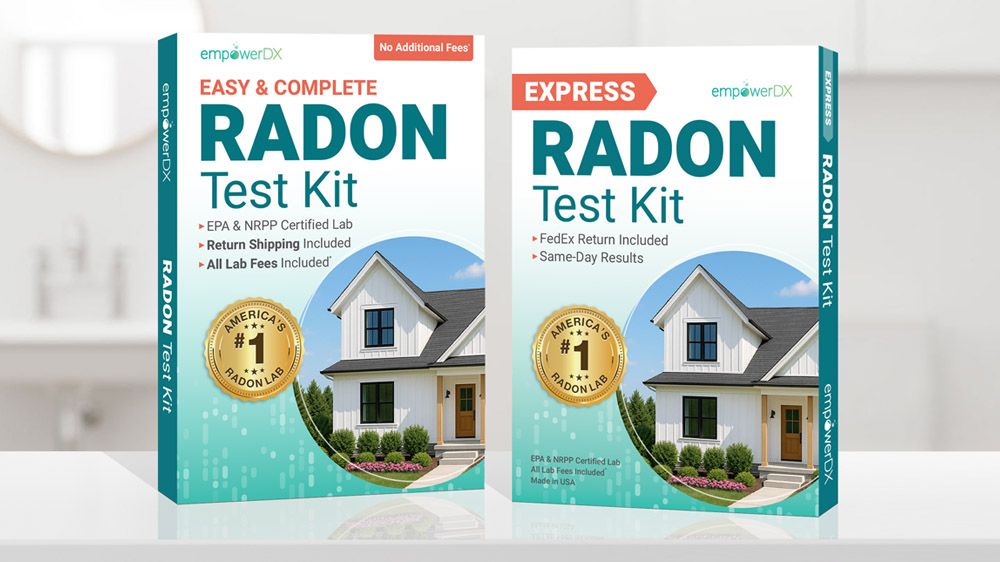
No matter which option you choose, you’re getting the same trusted test, just with a turnaround time that fits your needs.
Take Control of Your Indoor Air Quality
Radon exposure is a serious health risk, but testing puts the power back in your hands. With a simple at-home kit and professional lab analysis, you can gain peace of mind and take action if elevated levels are detected.
Test your home today and protect what matters most.
Resources:
[1] U.S. Environmental Protection Agency (EPA) - Health Risk of Radon https://www.epa.gov/radon/health-risk-radon
[2] Cleveland Clinic - Radon Gas: What It Is, Symptoms & Treatment https://my.clevelandclinic.org/health/diseases/21523-radon-gas